
Cellular rubber vs solid rubber (solid rubber): the difference
Cellular rubber and solid rubber may at first glance look quite similar. However, they behave very differently once you compress or load them. The difference is not only in the type of rubber but especially in the structure. On this page, we explain the main differences and show what else you should consider when choosing materials.

On this page:
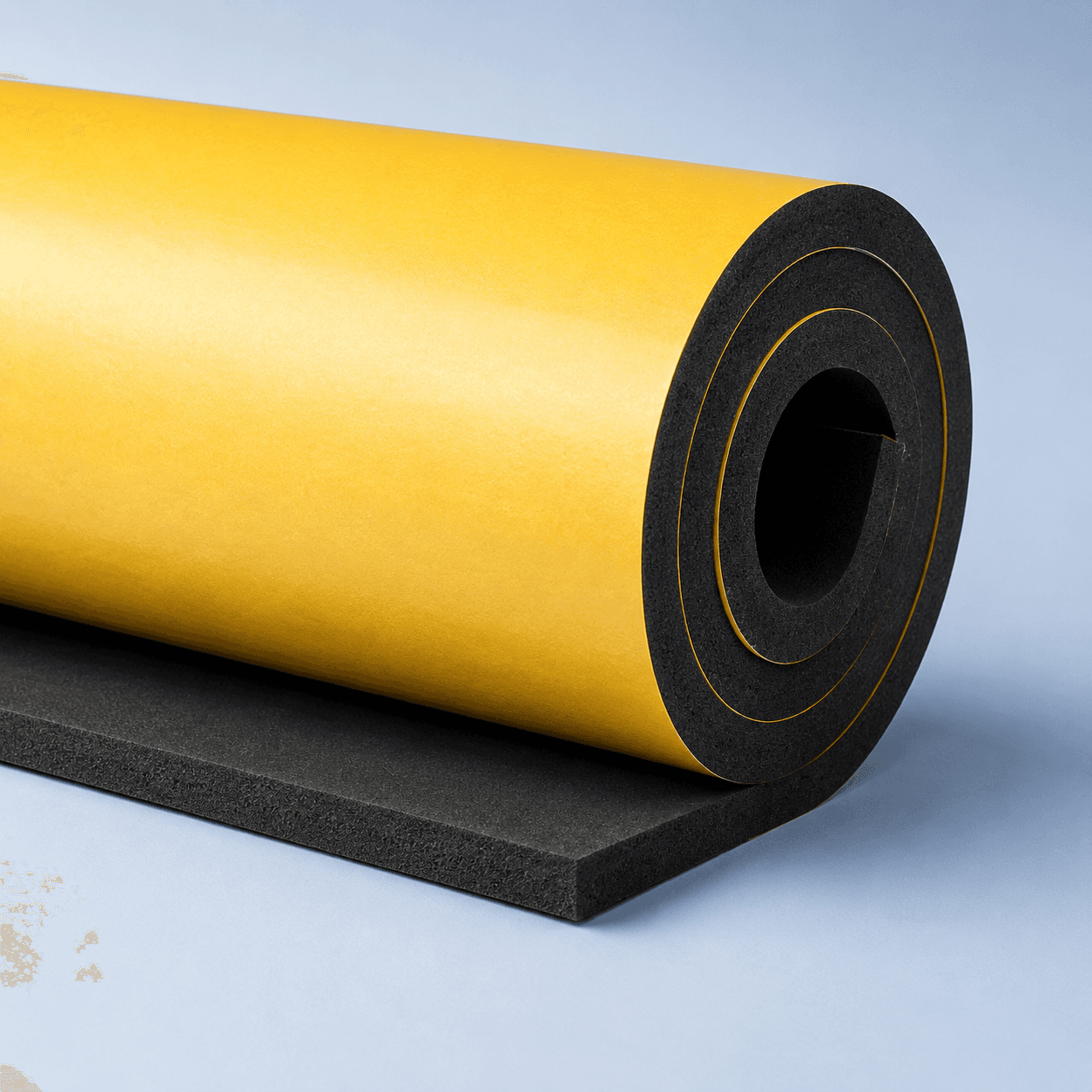

The difference
The biggest difference between cellular rubber and solid rubber (also known as mass rubber) lies in the structure. Cellular rubber has a cellular, foamed structure and is relatively easy to compress. Solid rubber is denser and more massive. It deforms less easily and comes in hardness levels up to 90-95 Shore A compared to a maximum of about 50 Shore A for cellular rubber. Choose cellular rubber for seals, draft strips, or vibration damping where compressibility is required. Choose solid rubber for edge protection and applications where durability and strength are more important than compression.
But there are more properties that determine which rubber is best suited for your application! Below we delve further into the differences and help you step by step to make the right choice.
Cellular rubber and solid rubber at EKI
Refine your selection:
Selecting multiple choices is possible
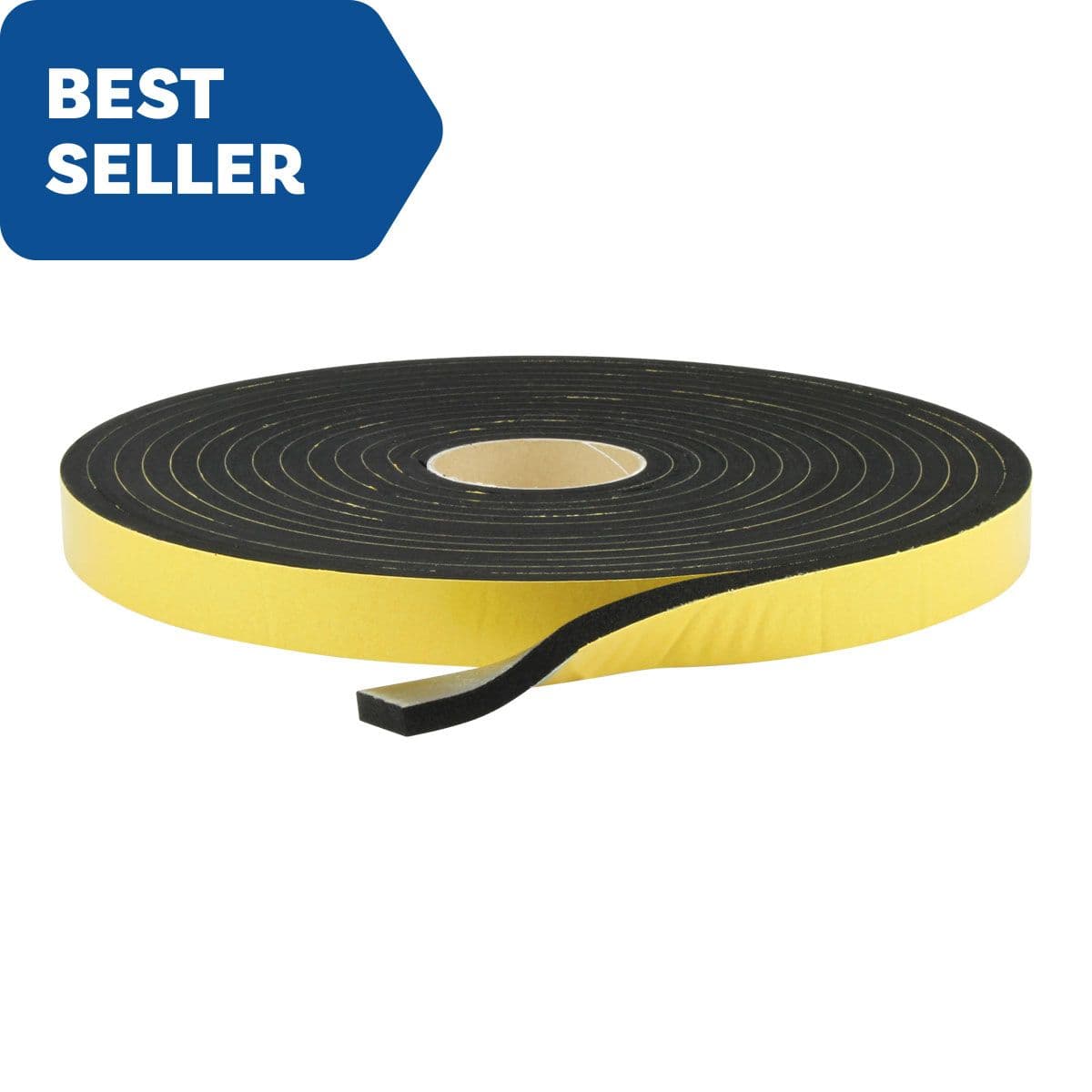


Properties of cellular rubber and solid rubber
What is cellular rubber?
Cellular rubber is a foamed, flexible rubber with a closed, semi-closed, or open cell structure. This makes it quite light and easy to compress. After pressing, it easily returns to its original shape. It is used, among other things, for draught strips or seals.
Within EKI's assortment, you will find cellular rubber with different cell structures and properties. EKI supplies cellular rubber in EPDM, neoprene, NBR, and NR, suitable from very soft to approximately 50 Shore A.
What is solid rubber (massive rubber)?
Solid rubber, also known as massive rubber, does not have a cellular structure. The material is therefore denser and harder than cellular rubber. Solid rubber is also less easily compressed. Therefore, solid rubber is mainly used when the material is mechanically loaded or needs to protect against, for example, pressure, friction, or impacts.
Solid rubber comes in hardnesses from approximately 60 to 95 Shore A. EKI processes it into sheet rubber, U-profiles and rubber strips, in raw materials such as SBR, EPDM, NBR, neoprene, butyl, and silicone.
Good to know
Cellular rubber and solid rubber can both be made from EPDM, for example. EPDM refers to the raw material and properties such as weather, UV, and ozone resistance. Cellular or solid rubber mainly refers to the structure and how the material deforms.
When to choose cellular rubber and when solid rubber?
Choose cellular rubber if...
the material needs to compress to seal irregularities or gaps
you need a draught strip, sealing tape, or vibration dampener
lightweight and flexibility are more important than wear resistance
Choose solid rubber if...
you need firm edge protection or finishing of sheet edges
the material is exposed to friction, impacts, or heavy mechanical stress
you are looking for support rubber for proper pressure distribution in heavy constructions
Rule of thumb
Does the rubber mainly need to deform to fill or seal spaces? Then consider cellular rubber first. Does it mainly need to take loads, protect, or resist friction? Then solid rubber is usually more appropriate.
What is Shore hardness?
Shore hardness indicates how hard or soft rubber is. The higher the value within the same Shore scale, the harder the material. For solid rubber, Shore A is usually used, while for soft cellular rubber, Shore 00 is also applied. These scales are not directly comparable.
Moreover, Shore hardness doesn't tell everything about the compressibility of cellular rubber. Two types of cellular rubber can both feel 'soft,' but react very differently under load.
In 3 steps to the right rubber
When choosing the right material for your application, consider what the rubber must do and under what conditions it is used. Then choose the raw material that suits the conditions.
Step 1. What must the rubber do?
Think about the function of the material. Must the rubber be flexible to seal a gap, for example? Or must it be hard and able to withstand heavy loads or impacts?
Step 2. Cellular rubber or solid rubber?
Based on the function, you determine whether cellular rubber or solid rubber is most suitable. For compression and sealing, cellular rubber is often the obvious choice. For mechanical stress and protection, solid rubber is often more suitable.
Step 3. Which raw material?
Then look at the conditions in which the rubber is used, such as UV, ozone, oil, water, and temperature. For example, EPDM is often used when weather, UV, and ozone resistance are important. NBR is often chosen when oil resistance is an important requirement.
Conclusion
Cellular rubber and solid rubber solve different problems. Cellular rubber is the right choice when compressibility is needed, such as in seals and vibration damping. Solid rubber is the stronger choice when strength and wear resistance are paramount, such as in edge protection and mountings. Both materials are available in different raw materials, allowing you to further tailor the weather, oil, or temperature resistance to your application.
Are you unsure which type of rubber and which raw material best suits your situation? Contact us for advice. We are happy to help you choose a suitable solution.