
Cellular rubber vs sponge rubber: the difference
Cellular rubber and sponge rubber are often mentioned in the same breath. This is not surprising, as both are foamed rubber materials used in similar applications. However, there are important differences, for example, in their structure, manufacturing process, and air and water tightness. In this article, we explain the key differences and help you make the right choice.

On this page:


In short
The main difference between cell rubber and sponge rubber is in the structure and density. Cell rubber is cut from blocks and has a closed, semi-closed, or open cell structure without a separate skin. Sponge rubber is extruded and has a closed skin around an open cell structure, making it airtight and watertight.
That difference largely determines how the materials are processed and applied. Cell rubber offers many customization options, such as sheets, strips, rings, and blocks. Choose sponge rubber if you need a profile that prevents air and water ingress, such as for draught or crown bands.
But the closed skin is not the only factor in your choice. Below, we zoom in on the properties of each material and help you step by step to the right choice.
Properties of cellular rubber and sponge rubber
What is cellular rubber?
Cellular rubber is a flexible, foamed rubber. EKI processes the material itself: from blocks to sheets and rolls. From there, it can be further processed into sheets, cellular rubber strips, rings, and customized blocks. The material has good mechanical properties and springs back to its original shape after compression. EKI supplies cellular rubber in four raw materials: EPDM, neoprene, NBR, and NR.
What is sponge rubber?
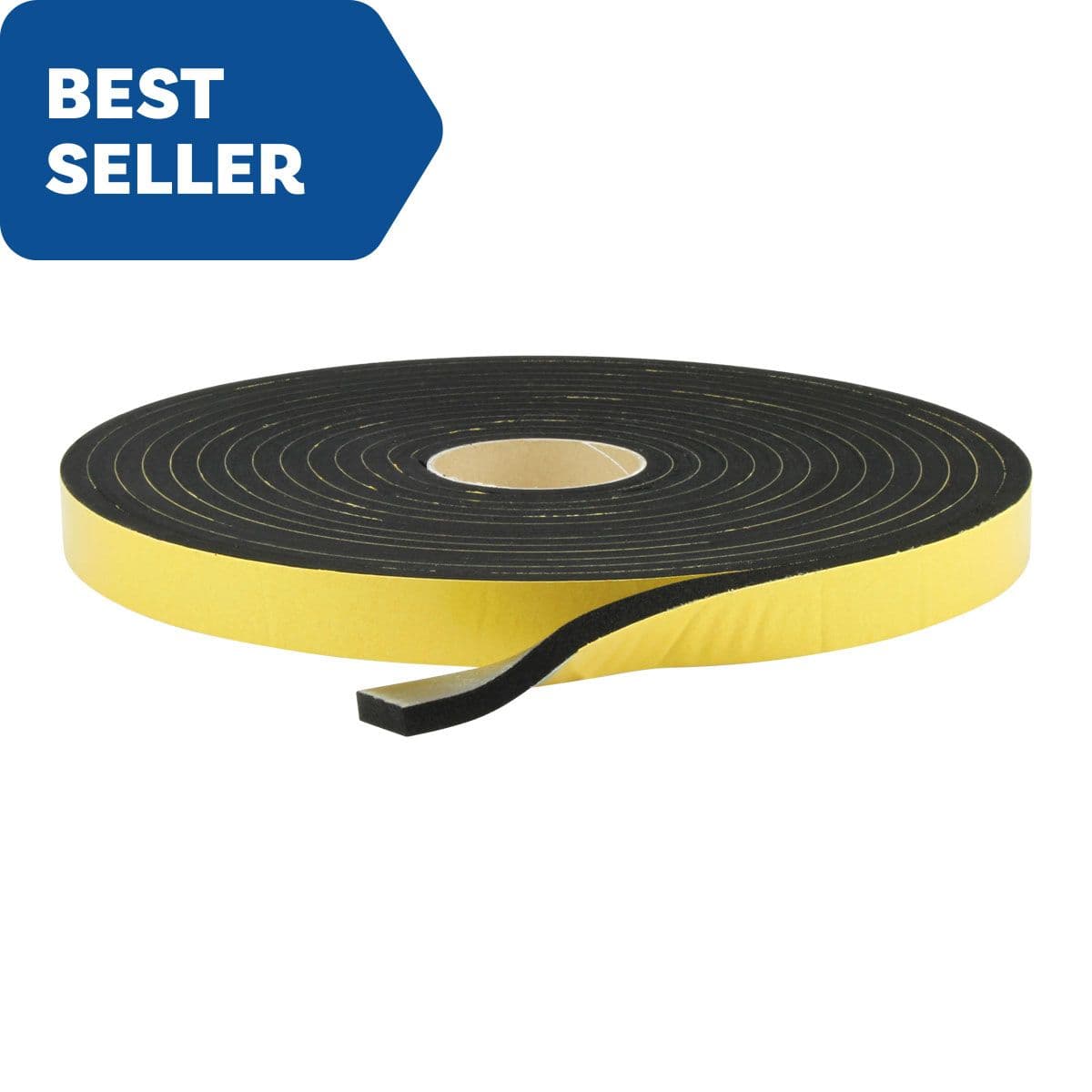
Sponge rubber is a foamed rubber with a different structure. There is a skin around the material, making it airtight and watertight, even with an open cell structure inside. This skin forms during the extrusion process, where the material is pressed through a mold.
Sponge rubber is mainly used for profiles, such as D- and P-profiles, draught strips, and crown bands. The closed exterior helps to keep out air and water. EKI supplies sponge rubber in EPDM, silicone, neoprene, and NR.
Good to know
Cellular rubber and sponge rubber can be made from the same raw materials, like EPDM or neoprene. The raw material largely determines properties such as resistance to weather, oil, and temperatures. Whether it is called cellular rubber or sponge rubber mainly refers to the manufacturing method and the presence of a skin, not the raw material itself. When making a choice, consider not only the type of rubber but also the raw material and application.
Cellular rubber and sponge rubber at EKI
Refine your selection:
Selecting multiple choices is possible


Cell rubber | Sponge rubber | |
Cell structure | Closed, semi-closed, or open, no separate skin | Always a skin around the material by extrusion |
Waterproofness | Water-repellent with closed cell structure, not guaranteed waterproof | Airtight and watertight thanks to the skin |
Production | Cut from blocks to sheets, rolls, and custom shapes | Extruded into profiles and rolls |
Raw materials at EKI | EPDM, neoprene, NBR, NR | EPDM, silicone, neoprene, NR |
Typical shapes | Sheets, strip, rings, blocks | D-profile, P-profile, draught and crown bands on roll |
Typical application | Sealing, insulation, vibration damping, and customization | Draught and crown bands at window frames, seals against water |
When should you choose cellular rubber and when sponge rubber?
Which option is most suitable depends on the shape, function, and circumstances in which you use the material. A choice guide:
Choose cellular rubber if...
you need sheets, blocks, rings, or other custom shapes
you want material that springs back well after prolonged compression
water-repellency is sufficient and a guaranteed airtight skin is not needed
you work with cellular rubber strip for draught prevention or vibration damping in, for example, construction or automotive
Choose sponge rubber if...
you need a profile that must be guaranteed airtight or watertight
you need draught or crown bands at window frames or facade constructions
you want an extrusion profile instead of a cut shape
there is contact with (a lot of) water, such as with hatches or seals on board ships
Rule of thumb
Should the material be guaranteed airtight or watertight via a ready-made profile? Then look at sponge rubber first. Do you need a custom-cut shape, such as a sheet, ring, or block? Then cellular rubber is more likely the choice.
How about airtightness and waterproofness?
Cellular rubber with closed cells absorbs little to no water and is therefore often used for seals. Sponge rubber has an open cell structure with a closed skin. This outer skin forms an extra barrier against air and water.
Is sponge rubber then always more watertight than cell rubber? Not automatically. Cellular rubber with a closed cell structure is also very water-repellent, especially in EPDM. The difference is that sponge rubber, thanks to the skin, is guaranteed airtight and watertight, regardless of the cell structure inside. In applications where 100% tightness is a strict requirement, such as a crown band at a window frame, sponge rubber is the right choice.
What do open, closed, and semi-closed cell structures mean?
The cell structure indicates how the tiny cells in a foamed material are constructed. It also determines whether a material allows liquids through. In a closed cell structure, the cells are individually sealed. This prevents water and air from passing through. In an open cell structure, the cells are interconnected, allowing air and moisture to pass through easily. Semi-closed is in between. In sponge rubber, the open cell structure is surrounded by a closed outer skin. Cellular rubber does not have this separate skin.
In 3 steps to the right rubber
When choosing the right material for your application, consider what the rubber should do and the conditions in which it is used. Then choose the raw material that matches the conditions.
1. What should the material do?
Think about the function. Does the material mainly need to be cut to a specific shape? Or does it need to be guaranteed airtight or watertight in a ready-made profile?
2. Cellular rubber or sponge rubber?
For custom shapes like sheets, rings, and blocks, cellular rubber is obvious. For a guaranteed tight profile, like draught or crown bands, sponge rubber is the safer choice.
3. Which raw material?
Consider the conditions: EPDM for weather, UV, and ozone resistance outdoors, NBR or neoprene for contact with oil, and NR for applications with the best mechanical rebound indoors.
Conclusion
Cell rubber and sponge rubber are not competitors but materials with different strengths. Cell rubber offers many possibilities for custom cutting where mechanical rebound is important. Sponge rubber is the selected choice once a guaranteed airtight or watertight profile is required, such as with draught and crown bands.
Which option fits best also depends on the raw material and the conditions in which you use the material. In both cases, the raw material, such as EPDM for outdoor use or NBR for oil contact, determines the final resistance.
Are you unsure which combination of material and raw material fits your application? Get contact for tailored advice.